
A mini facelift is usually the right choice when sagging is mild and limited to the jowls and lower cheeks. A full facelift is usually the better fit when loose skin and tissue extend from the midface through the jawline and into the neck. At Regeneris Cosmetic Surgery, Dr. Ryan Welter and Dr. Edwin Ishoo, our board-certified cosmetic surgeons, make that call with you by looking at your skin quality, the depth of your folds, the definition of your jawline, and the results you want to see. This guide explains each option so you arrive at your consultation ready to make a confident choice.
Aging changes the face in layers. Skin loses elasticity, deeper tissues descend, and the angle between the jaw and neck softens. Folds around the nose and mouth deepen, and jowls form along the jawline.
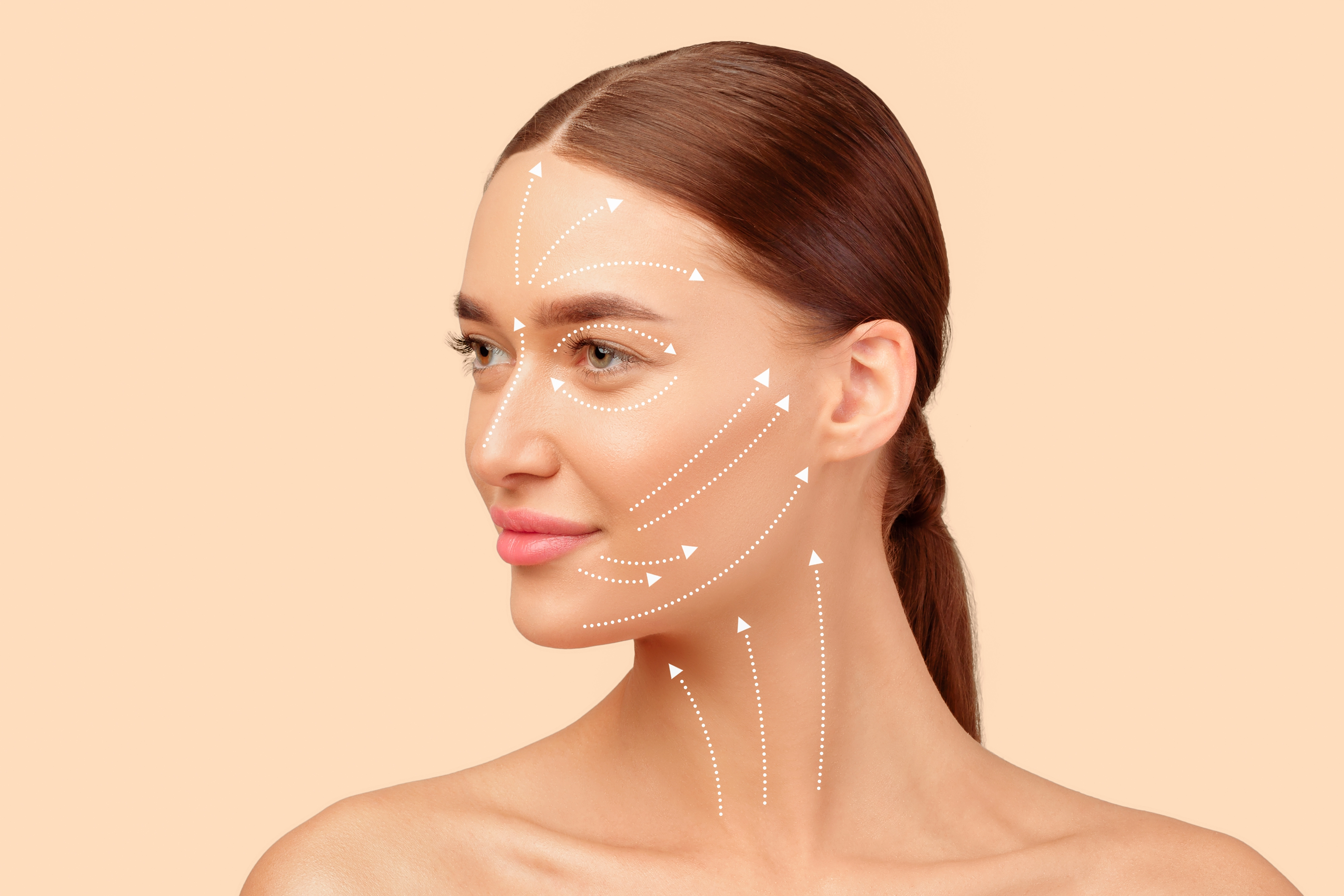
A facelift repositions these tissues to restore structure. Our approach to Facelift focuses on precision and balance. The goal is to elevate your features without changing who you are. Patients should look refreshed and rested, not pulled or windswept.
Both the mini and full facelift share this goal. The difference lies in how much of the face each one addresses and how much correction each can deliver.
A mini facelift is a more targeted version of facelift surgery. It is designed for patients who are noticing the first signs of laxity and want to correct them before they progress.
A mini facelift lifts and tightens the lower portion of the face through a smaller access area. Because the treatment zone is limited, the surgery is shorter and the recovery is usually lighter.
Our surgeons offer an “Awake” local anesthesia option for many facial procedures. Patients who choose it stay comfortable while remaining involved in their treatment. Whether this option suits your mini facelift is something we review together during your consultation.
A mini facelift focuses on:
Early jowling along the jawline
Mild sagging in the lower cheeks
Softening definition at the lower face
It does not address significant neck laxity or deep midface descent. Patients with those concerns typically need a more comprehensive approach.
Mini facelift incisions are shorter than those used in a full facelift. They are generally placed near the ear, following natural creases so scars blend with the surrounding contours. As they heal, most patients find the scars are easy to conceal, even with short hairstyles.
A full facelift, sometimes called a traditional facelift, treats the face as a connected structure. It addresses moderate to advanced aging across a wider area.

A full facelift repositions deeper facial tissues and removes excess skin across the midface, lower face, and often the neck. This broader approach allows for more significant correction than a mini facelift can provide.
Because the surgery covers more ground, it takes longer and requires a longer recovery. Our surgeons tailor each full facelift to the patient’s anatomy so the result looks balanced from every angle.
A full facelift can address:
Moderate to deep jowls
Sagging in the midface and cheeks
Deep folds between the nose and mouth
Loose skin and banding in the neck
A blurred jawline and neck angle
Full facelift incisions are longer. They typically follow the hairline and the natural curves around the ear, and they may extend behind the ear toward the scalp. A small incision under the chin may be added when the neck needs attention. Careful placement lets scars hide within natural shadows and the hair, and they continue to fade over the following months.
Both procedures lift and refresh the face. The details below explain where they part ways.
A mini facelift corrects mild, localized sagging in the lower face. A full facelift corrects moderate to advanced aging across the midface, jawline, and neck. Choosing a mini facelift when your concerns call for a full one can leave the neck or midface untreated, which may look unbalanced.
A mini facelift generally involves less swelling and bruising, so patients return to daily life sooner. A full facelift requires more downtime because more tissue has been treated.
Neither procedure stops the aging process. Both reset the clock. Because a full facelift repositions deeper structures across a wider area, its results tend to last longer. A mini facelift delivers lasting improvement for patients with early laxity, though some later choose additional treatment as aging continues.
Good candidates for either procedure are in stable health, do not smoke, and have realistic expectations about what surgery can achieve.
Age alone does not decide which facelift fits. Skin quality and the degree of laxity matter more. Many patients in their 40s and early 50s with good elasticity and early jowling do well with a mini facelift. Patients with heavier skin, deeper folds, or significant neck laxity are usually better suited to a full facelift, regardless of age.
Sun damage, weight changes, and genetics all influence how the face ages. Our surgeons evaluate how your skin responds and how much support the underlying tissue needs.
Your goals shape the plan as much as your anatomy does. Some patients want a subtle refresh that friends notice without being able to name. Others want to restore a defined jawline and smooth neck they have not seen in years. Sharing exactly what bothers you helps our surgeons match the procedure to the outcome you want.
Every patient heals at their own pace. The timelines below describe what many patients experience.

First few days: Mild swelling, bruising, and tightness around the jaw and ears. Rest with your head elevated.
About one week: Most visible bruising fades. Many patients return to desk work and light routines.
Two weeks: Many patients feel comfortable in social settings.
Following months: Residual swelling settles and the final contour becomes clear.
First week: Swelling and bruising are more noticeable. Rest and follow your aftercare instructions closely.
Two to three weeks: Most bruising resolves. Many patients return to work and social plans.
Four to six weeks: Patients can usually resume more strenuous activity with clearance from their surgeon.
Several months: Subtle swelling continues to resolve, and scars soften and fade.
Our team provides clear aftercare guidance and follow-up so you know what to expect at each stage.
A facelift addresses the lower and middle face, but aging also affects the eyes, brow, and neck. Combining treatments can create a balanced, harmonious result. Our full menu of facial procedures makes it possible to plan these together.
Patients choosing a mini facelift often pair it with treatments that refine smaller areas:
Blepharoplasty: Blepharoplasty addresses heavy upper lids or puffy lower lids.
Chin lipo: Removes stubborn fat beneath the chin to sharpen the jawline.
Fat transfer to the face: Restores lost volume in the cheeks and under the eyes.
Patients with more advanced aging often benefit from addressing several regions at once:
Neck lift: Tightens loose neck skin and muscle bands for a cleaner neck angle.
Brow lift: Raises a heavy or low brow that can make the eyes look tired.
Blepharoplasty: Refreshes the eyes so they match the rejuvenated face.
Cheek implants or chin implant: Adds structural definition where bone support has changed.
Combining procedures often means one recovery period. Our surgeons advise which pairings make sense for your anatomy and goals.
This is where Mini Facelift vs. Full Facelift: How We Help You Decide becomes personal. The right choice rests on your face, your timeline, and your priorities.
Ask yourself these questions before your consultation:
Where is the sagging? Concerns limited to the jowls point toward a mini facelift. Concerns that include the neck and midface point toward a full facelift.
How much downtime can you plan for? A mini facelift requires less time away from work and social life.
How long do you want results to last? A full facelift offers more comprehensive and longer-lasting correction.
Are other areas bothering you? Concerns about the eyes, brow, or neck may change the plan.
During your consultation, Dr. Ryan Welter or Dr. Edwin Ishoo examines your skin elasticity, facial structure, and the degree of laxity in each region. You will discuss what you want to change and what you want to keep. From there, your surgeon recommends either a mini or full facelift, along with any additions that would support a balanced result.
You leave knowing which procedure fits your face, what recovery will look like, and what results you can realistically expect. That clarity is the purpose behind Mini Facelift vs. Full Facelift: How We Help You Decide, and it is how our surgeons approach every facial plan. You can learn more about our team on our about us page.
A mini facelift suits early, localized sagging in the lower face and offers a quicker recovery. A full facelift addresses moderate to advanced aging across the midface, jawline, and neck, with longer-lasting results. Dr. Ryan Welter and Dr. Edwin Ishoo guide each patient to the option that matches their anatomy and goals, so the result looks like a refreshed version of themselves.